The Complete Guide to Laser Cleaning Machines for Industrial Surface Preparation and Restoration
Laser Cleaning Machines
As manufacturers, contractors, municipalities, and restoration professionals search for more efficient alternatives to sandblasting and chemical cleaning, laser cleaning technology is becoming a preferred solution for surface preparation, rust removal, paint stripping, and industrial maintenance.
This guide explains what a laser cleaning machine is, how industrial laser cleaning works, and why businesses are increasingly adopting the technology. We cover the advantages of laser cleaning over traditional methods, common applications across industries, how to evaluate machine power levels, and when renting a laser cleaning machine may make more sense than purchasing equipment.
We also examine the differences between laser cleaning and sandblasting, the role of rust removal laser cleaning in modern maintenance programs, and the factors businesses should consider when selecting a machine for long-term operational use.
The key shift: Laser cleaning is no longer a niche technology. It is becoming a practical surface preparation solution for organizations seeking greater precision, reduced waste, lower consumable costs, and improved operational efficiency.
Industrial surface preparation has long relied on methods such as sandblasting, grinding, chemical stripping, and abrasive media blasting. While these processes remain common across manufacturing, construction, restoration, and infrastructure sectors, they often introduce additional challenges. Consumable costs, secondary waste generation, extensive cleanup requirements, and the risk of surface damage can significantly impact operational efficiency.
Today, businesses are searching for alternatives that deliver precision, consistency, and long-term cost savings. The laser cleaning machine has emerged as one of the most significant advancements in surface preparation technology. By using concentrated laser energy to remove contaminants without direct physical contact, laser cleaning offers a controlled, highly effective solution. It helps remove rust, strip paint, remove soot, and prepare surfaces.
Across Ontario, manufacturers, municipalities, contractors, and restoration specialists are increasingly evaluating industrial laser cleaning as a replacement for traditional cleaning methods. The technology offers improved precision, reduced waste generation, lower consumable costs, and greater versatility across a wide range of applications.
Whether the objective is preparing metal for welding, restoring historical structures, removing oxidation from industrial equipment, or evaluating a laser cleaning machine rental before purchase, understanding how laser cleaning technology works is critical for making informed decisions.
This guide explains everything businesses need to know about laser cleaning machines, including how they work, where they are used, how they compare to sandblasting, and how to determine whether renting or purchasing a system is the right choice.
What Is a Laser Cleaning Machine?
A laser cleaning machine is an advanced surface treatment system that uses focused laser energy to remove contaminants, coatings, corrosion, and residues from a material surface.
Unlike abrasive cleaning methods that physically impact a surface, laser cleaning works through a process known as laser ablation. The laser energy is absorbed by the unwanted material, causing it to vaporize or separate from the substrate without damaging the underlying surface.
This allows operators to remove contaminants with exceptional precision while maintaining the integrity of the base material.
The technology can be applied to various materials, including:
Carbon steel
Stainless steel
Aluminum
Concrete
Stone
Industrial equipment
Manufacturing components
The result is a cleaner, more controlled surface preparation process that supports both maintenance and production applications.
How Does Industrial Laser Cleaning Work?
Understanding how industrial laser cleaning works helps explain why the technology has gained attention across multiple industries.
Laser cleaning systems generate concentrated pulses of energy that are directed toward the contaminated surface. When the laser beam contacts rust, paint, soot, or another unwanted material, the contaminant absorbs the energy.
Because contaminants often absorb laser energy differently than the underlying substrate, the unwanted material is removed while the base surface remains largely unaffected.
The Laser Cleaning Process
Surface Identification
Operators identify the material and the type of contamination.
Laser Parameter Selection
Power settings are adjusted according to the application requirements.
Energy Delivery
Laser pulses are directed toward the target area.
Contaminant Removal
The unwanted material absorbs energy and separates from the surface.
Surface Preparation
The cleaned substrate is immediately ready for further processing or inspection.
This controlled process allows laser cleaning to achieve highly repeatable results across industrial environments.
Why Are Businesses Replacing Traditional Surface Cleaning Methods?
For decades, industrial cleaning relied on techniques that required significant labour, consumables, and cleanup.
Today, organizations are increasingly evaluating whether these traditional approaches remain the most efficient option.
Sandblasting Limitations
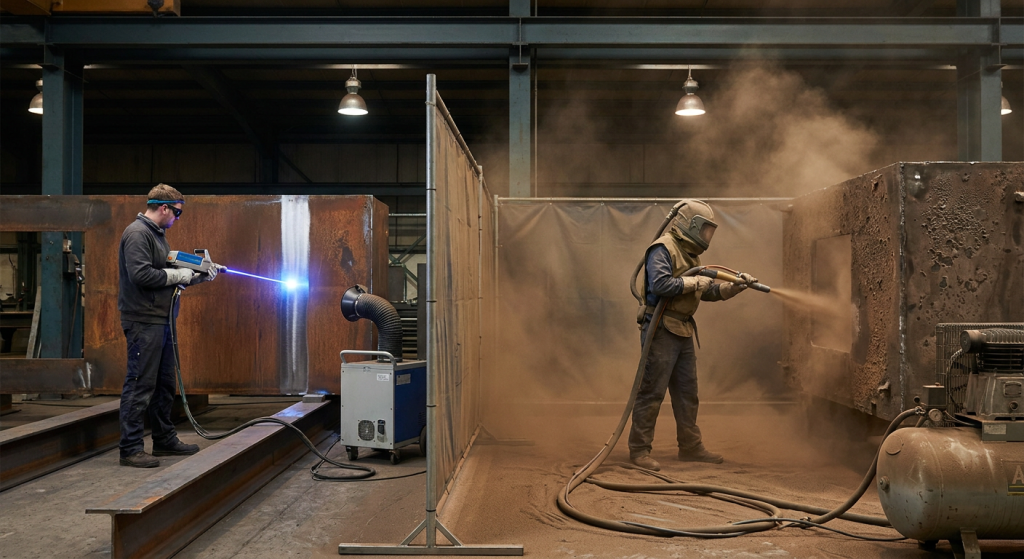
Sandblasting remains effective for many applications, but it generates significant dust, requires ongoing media purchases, and often entails extensive cleanup.
Businesses must also manage waste disposal and media handling procedures.
Grinding can be effective but often lacks the precision required for sensitive or high-value components.
It may also increase labour requirements for larger projects.
What Are the Benefits of Industrial Laser Cleaning?
Several practical advantages drive the growing adoption of industrial laser cleaning.
No Consumables
Traditional blasting methods rely on continuous purchases of consumables.
Laser cleaning eliminates the need for:
Sand
Abrasive media
Chemical agents
This can significantly reduce long-term operating costs.
Reduced Waste Generation
Because no blasting materials are involved, laser cleaning typically generates less secondary waste.
Cleanup requirements are often reduced, improving overall efficiency.
Precision Cleaning
Laser technology allows operators to target specific contaminants while preserving surrounding areas.
This precision is particularly valuable when working with:
Sensitive surfaces
High-value components
Restoration projects
Lower Long-Term Operating Costs
Although the initial investment may be higher than traditional equipment, many organizations achieve cost savings through:
Reduced consumable purchases
Lower cleanup requirements
Increased productivity
Reduced material damage
Improved Workplace Cleanliness
Laser cleaning produces a more controlled work environment compared with abrasive blasting.
Consistent Results
Operators can achieve highly repeatable cleaning outcomes across multiple projects.
Learn how laser cleaning can reduce consumable costs, simplify cleanup, and improve the efficiency of surface preparation. Contact Titan Laser Inc. to explore available solutions.
What Can a Laser Cleaning Machine Remove?
One of the reasons laser cleaning technology continues to gain traction across industrial sectors is its versatility. A single laser cleaning machine can remove a wide range of contaminants, coatings, and unwanted surface materials while preserving the integrity of the underlying substrate.
Unlike abrasive blasting methods that often affect both the contaminant and the base material, laser cleaning targets specific layers with exceptional precision. This allows operators to achieve consistent cleaning results while minimizing the risk of surface damage.
Rust Removal
Rust remains one of the most common challenges faced by manufacturers, infrastructure operators, municipalities, and maintenance teams. Corrosion can impair equipment performance, shorten asset lifespans, and lead to costly maintenance if left untreated.
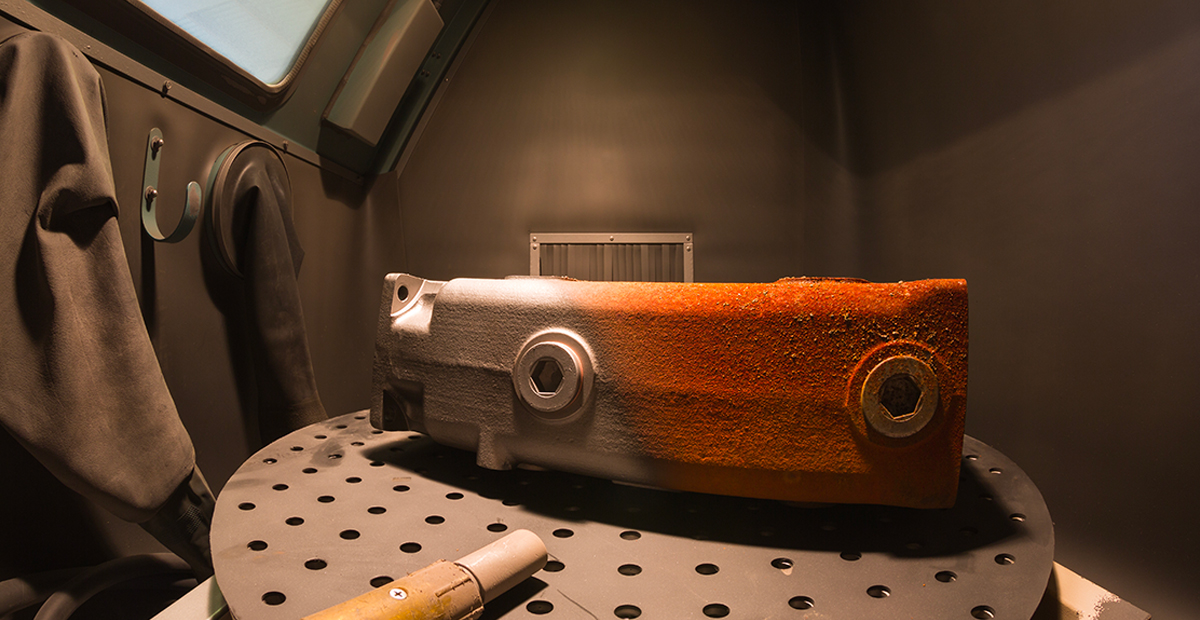
Laser-based rust removal provides a highly controlled method for eliminating oxidation without grinding, sanding, or abrasive blasting. The laser energy is absorbed by the rust layer, allowing it to separate from the metal surface while preserving the underlying material.
This approach is particularly valuable for:
Industrial equipment
Manufacturing machinery
Structural steel
Automotive components
Infrastructure assets
Restoration projects
Paint Removal
Removing paint often requires significant labour and cleanup when using traditional methods. Laser cleaning offers a more precise solution for paint stripping applications where surface preservation is important.
Applications include:
Manufacturing equipment refurbishment
Surface preparation before repainting
Automotive restoration
Industrial maintenance projects
Because laser cleaning can target specific layers, operators can often remove coatings without unnecessarily impacting the underlying substrate.
Soot Removal
Fire damage restoration frequently involves removing soot and carbon deposits from surfaces.
Laser cleaning can assist with:
Industrial fire restoration
Manufacturing facility maintenance
Historical restoration projects
Structural cleaning applications
The technology allows operators to remove contaminants while maintaining greater control over the cleaning process.
Oxidation and Surface Contamination Removal
Industrial environments often expose equipment and materials to conditions that create oxidation, residue buildup, and contamination.
Laser cleaning can help remove:
Oxidation
Surface residues
Manufacturing contaminants
Production-related deposits
This improves surface quality and supports subsequent manufacturing processes.
Concrete Restoration
Concrete surfaces often accumulate coatings, contaminants, and environmental staining over time.
Laser cleaning technology can support concrete restoration projects by removing unwanted materials from the surface while maintaining greater precision than many traditional cleaning methods.
Common applications of concrete restoration include:
Infrastructure restoration
Building maintenance
Surface preparation
Historical preservation projects
Surface Preparation Before Manufacturing Processes
Many manufacturing operations require clean surfaces before further processing.
Laser cleaning supports:
Welding preparation
Coating preparation
Bonding applications
Inspection processes
Surface conditioning
The ability to achieve a clean substrate without introducing additional contaminants makes laser cleaning particularly valuable in precision manufacturing environments.
From rust and paint removal to concrete restoration and soot cleaning, Titan Laser Inc. can help identify the right laser cleaning solution for your application. Request a consultation today.
Which Industries Benefit Most from Industrial Laser Cleaning?
As laser cleaning technology becomes more accessible, adoption continues to expand across a variety of sectors. Organizations are increasingly looking for solutions that reduce waste, improve precision, and support long-term operational efficiency.
Manufacturing
Manufacturers often require consistent surface preparation to support production quality.
Still comparing laser cleaning vs sandblasting? Speak with the team at Titan Laser Inc. to evaluate the most effective and cost-efficient approach for your project.
Choosing the Right Laser Cleaning Machine
Selecting the right laser cleaning machine involves more than simply choosing the highest available power level. The ideal system depends on the type of contamination to be removed, the material being cleaned, the project volume, the operating environment, and long-term business objectives.
Organizations evaluating industrial laser cleaning should focus on how the equipment will be used in real-world conditions rather than comparing wattage alone.
Material and Surface Type
Different materials respond differently to laser energy.
Common substrates include:
Carbon steel
Stainless steel
Aluminum
Cast iron
Concrete
Stone
Understanding the substrate helps determine the appropriate power level and cleaning parameters.
Contamination Type
The type of material being removed significantly impacts machine selection.
Applications may involve:
Light rust removal
Heavy corrosion removal
Paint stripping
Soot removal
Oxidation removal
Surface preparation
Lighter contamination often requires less power, while heavy industrial cleaning projects may benefit from higher-powered systems.
Cleaning Speed Requirements
Production environments often prioritize throughput and efficiency.
Organizations should evaluate:
Project volume
Cleaning frequency
Surface area
Downtime requirements
Higher-powered machines generally complete large-scale projects faster, while lower-powered systems may be ideal for precision applications.
Portability Requirements
Some businesses require a machine that can move easily between job sites, facilities, or production areas.
Portable laser cleaning systems can be particularly beneficial for:
Contractors
Maintenance teams
Restoration professionals
Municipal operations
Future Growth Considerations
Many organizations initially purchase equipment for a specific application but later expand its use across additional departments or projects.
Selecting a machine that accommodates future requirements can improve long-term value and operational flexibility.
Comparing Laser Cleaning Machine Power Levels
One of the most common questions businesses ask is:
“How much power do I actually need?”
While higher power typically delivers faster cleaning speeds, it is not always necessary for every application. The best choice depends on contamination levels, project volume, and production requirements.
Laser Cleaning Machine Comparison Table
Feature
200W
300W
500W
1000W
Light Rust Removal
Excellent
Excellent
Excellent
Excellent
Heavy Rust Removal
Moderate
Good
Very Good
Excellent
Paint Removal
Moderate
Good
Excellent
Excellent
Soot Removal
Excellent
Excellent
Excellent
Excellent
Cleaning Speed
Entry-Level
Moderate
Fast
Maximum
Production Volume
Low
Medium
High
Very High
Portability
Highest
High
Moderate
Lower
Manufacturing Applications
Small Shops
Medium Operations
Large Facilities
Industrial Scale
Maintenance Projects
Excellent
Excellent
Excellent
Excellent
200W Laser Cleaning Machine
A 200W system is often an excellent entry point for businesses exploring laser cleaning technology.
Ideal Applications
Light rust removal
Surface preparation
Equipment maintenance
Restoration work
Small-scale manufacturing
Benefits
Highly portable
Lower investment cost
Easy to operate
Suitable for precision work
Many organizations begin with a 200W machine before expanding to higher-powered systems as demand increases.
300W Laser Cleaning Machine
The 300W category offers a balance between portability and productivity.
Ideal Applications
Moderate rust removal
Paint stripping
General industrial maintenance
Facility upkeep
Benefits
Faster cleaning speeds
Versatile performance
Suitable for a wider range of applications
For many businesses, this power level provides a strong balance between flexibility and efficiency.
500W Laser Cleaning Machine
A 500W laser cleaning machine is often chosen by organizations with regular cleaning needs and high project volumes.
Ideal Applications
Heavy rust removal
Manufacturing operations
Production maintenance
Industrial restoration
Benefits
Faster throughput
Increased productivity
Greater efficiency on larger surfaces
This power level is frequently used in industrial environments where downtime reduction is a priority.
1000W Laser Cleaning Machine
A 1000W system is designed for demanding industrial applications where cleaning speed and throughput are critical.
Ideal Applications
Large-scale industrial cleaning
Manufacturing facilities
Infrastructure maintenance
Heavy corrosion removal
Benefits
Maximum cleaning speed
High-volume performance
Greater productivity for large projects
For organizations managing extensive maintenance programs, higher-powered systems can significantly reduce project timelines.
Not sure whether a 200W, 300W, 500W, or 1000W laser cleaning machine is right for your operation? Contact Titan Laser Inc. for expert guidance and machine recommendations based on your cleaning requirements and production goals.
When Does a Laser Cleaning Machine Rental Make Sense?
Not every business requires immediate ownership of equipment. For many organizations, a laser cleaning machine rental provides a practical way to evaluate the technology before committing to a purchase.
Rental programs also support short-term projects, maintenance shutdowns, and specialized cleaning applications.
Testing the Technology Before Purchase
Many businesses first encounter laser cleaning through a rental program.
This allows teams to:
Evaluate performance
Assess cleaning speed
Understand operational requirements
Calculate potential ROI
A rental often provides valuable real-world insight before making a capital investment.
Short-Term Projects
Some projects require laser cleaning for a limited period.
Examples include:
Equipment restoration
Infrastructure maintenance
Facility upgrades
Manufacturing shutdowns
Renting allows businesses to access advanced cleaning technology without purchasing equipment that may only be used occasionally.
Seasonal Maintenance Programs
Organizations with scheduled maintenance windows may benefit from temporary access to laser cleaning equipment.
This can improve flexibility while reducing equipment ownership costs.
Contractor Applications
Contractors often use laser cleaning machine rental programs to support specific client projects.
When Should a Business Purchase a Laser Cleaning Machine?
While rentals are valuable for many applications, ownership often becomes the more economical solution when cleaning requirements are frequent or ongoing.
Organizations performing cleaning activities weekly or monthly often realize greater value through ownership.
Examples include:
Manufacturing facilities
Fabrication shops
Maintenance departments
Equipment refurbishing operations
Multiple Facilities or Job Sites
Companies operating across multiple locations may benefit from maintaining in-house cleaning capabilities.
This reduces scheduling constraints and improves operational flexibility.
Long-Term Cost Reduction
Ownership eliminates recurring rental expenses and provides immediate access to equipment whenever needed.
For organizations with consistent cleaning requirements, this can improve overall cost efficiency.
Understanding the ROI of Laser Cleaning Technology
For many organizations, the decision to adopt laser cleaning technology ultimately comes down to return on investment. While the initial cost of a laser cleaning machine may be higher than some traditional cleaning equipment, the long-term financial benefits often extend well beyond the purchase price.
Traditional cleaning methods often require ongoing purchases of:
Sandblasting media
Abrasive materials
Chemical cleaners
Surface treatment products
These recurring expenses can accumulate significantly over time, particularly in facilities with frequent cleaning requirements.
A laser cleaning machine operates without these consumables, reducing ongoing operating expenses and simplifying inventory management.
Reducing Cleanup and Disposal Costs
Cleanup is frequently an overlooked expense when evaluating surface preparation methods.
Sandblasting and chemical cleaning often require:
Media collection
Waste containment
Surface cleanup
Disposal procedures
Laser cleaning minimizes secondary waste generation because there is no abrasive media to collect or dispose of after the cleaning process.
For many facilities, this translates into lower labour requirements and faster project completion.
Improving Labour Efficiency
Labour costs continue to rise across manufacturing, construction, and maintenance sectors.
Organizations increasingly seek technologies that improve productivity without compromising quality.
Industrial laser cleaning can help reduce:
Surface preparation time
Cleanup requirements
Project duration
Equipment downtime
These efficiencies allow maintenance teams and contractors to complete more work within the same timeframe.
Supporting Asset Longevity
Excessively aggressive cleaning methods can contribute to premature wear and damage over time.
Because laser cleaning is a controlled process, organizations can often maintain critical assets while reducing unnecessary material removal.
This can support:
Equipment lifespan
Infrastructure preservation
Reduced replacement costs
Better long-term asset management
Increasing Operational Flexibility
Many organizations discover that laser cleaning can be applied across multiple departments and applications.
A single system may support:
Rust removal
Paint stripping
Surface preparation
Equipment maintenance
Restoration projects
This versatility can increase utilization rates and improve overall equipment value.
Evaluate the long-term value of laser cleaning for your facility. Titan Laser Inc. can help assess cleaning requirements, operating costs, and potential return on investment.
Why Ontario Businesses Are Adopting Laser Cleaning Technology
Across Ontario, organizations are facing increasing pressure to improve efficiency, reduce waste, and extend the lifespan of critical assets.
Ontario remains one of Canada’s largest manufacturing hubs.
Facilities across sectors such as:
Automotive
Fabrication
Food processing
Industrial manufacturing
Equipment production
continue to invest in technologies that improve operational efficiency.
Laser cleaning aligns with these objectives by enabling faster, more controlled surface preparation.
Infrastructure Maintenance Requirements
Municipalities and infrastructure operators are responsible for maintaining valuable public assets.
Corrosion, contamination, and surface degradation create ongoing maintenance challenges.
Laser cleaning offers a way to address these issues while reducing some of the cleanup and waste concerns associated with traditional blasting.
Environmental Considerations
Many organizations are reviewing how their maintenance activities impact waste generation and operational sustainability.
Laser cleaning helps reduce dependence on:
Abrasive media
Chemical cleaning products
Excessive waste disposal
This makes it attractive for organizations seeking cleaner maintenance processes.
Skilled Labour Challenges
Labour shortages continue to affect multiple industries across Ontario.
Technologies that improve productivity and simplify maintenance operations are becoming increasingly valuable.
Laser cleaning helps organizations complete surface preparation tasks more efficiently while maintaining high precision.
Why Choose Titan Laser Inc.?
Adopting laser cleaning technology is about more than selecting equipment. Businesses also require access to guidance, support, and practical expertise to ensure successful implementation.
Titan Laser Inc. helps organizations across Ontario evaluate, adopt, and utilize laser cleaning technology through a combination of equipment sales, rentals, and on-site services. Titan Laser Inc. provides laser cleaning machines, rentals, and on-site laser cleaning services across Ontario, helping businesses transition from traditional methods such as sandblasting and chemical cleaning.
Laser Cleaning Machine Sales
Titan Laser Inc. offers laser cleaning machines designed to support a wide range of industrial cleaning applications.
Whether a business requires a compact solution for maintenance work or a higher-powered system for production environments, equipment options are available to match operational requirements.
Laser Cleaning Machine Rentals
Not every organization requires immediate ownership of equipment.
Titan Laser Inc. offers rental options that allow businesses to:
Evaluate the technology
Complete short-term projects
Support maintenance shutdowns
Test operational requirements before purchasing
This flexibility helps organizations make informed decisions regarding long-term adoption.
On-Site Industrial Laser Cleaning Services
For businesses that prefer to outsource cleaning projects, Titan Laser Inc. also provides on-site laser cleaning services throughout Ontario.
One of the most significant challenges facing businesses interested in laser cleaning is simply understanding how the technology works and how to apply it effectively.
Titan Laser Inc. focuses on practical guidance and hands-on support, helping customers gain confidence in both equipment selection and operation. The company emphasizes accessibility, support, and real-world usability to help businesses adopt a cleaner and more efficient approach to surface cleaning.
Certified Equipment and Warranty Protection
Titan Laser’s machines are FDA- and CE-certified, CSA-certified, and backed by a 3-year warranty.
These certifications and warranty protections provide additional confidence for organizations investing in advanced cleaning technology.
The Future of Industrial Surface Cleaning
Industrial cleaning technology continues to evolve as organizations seek solutions that improve precision, efficiency, and long-term operational performance.
The laser cleaning machine has emerged as a practical alternative to traditional methods by helping businesses reduce consumable use, minimize waste, improve surface-preparation accuracy, and support more efficient maintenance operations.
As adoption continues to grow across manufacturing, restoration, infrastructure maintenance, and industrial operations, laser cleaning is becoming less of an emerging technology and more of a mainstream operational solution.
Organizations evaluating industrial laser cleaning are increasingly focusing on long-term value rather than immediate project costs alone. Precision, repeatability, operational efficiency, and reduced cleanup requirements are becoming key factors in decision-making.
Whether the objective is rust removal, paint stripping, concrete restoration, surface preparation, or evaluating a laser cleaning machine for rental before purchase, laser technology offers a flexible solution for a wide range of industrial applications.
A laser cleaning machine is used to remove rust, paint, soot, oxidation, coatings, and other contaminants from surfaces through the controlled application of laser energy.
The answer depends on the application. Many businesses prefer laser cleaning because it offers greater precision, reduced waste generation, and eliminates the need for abrasive consumables.
Organizations with occasional or project-based needs often benefit from rental programs. Businesses with ongoing cleaning requirements may achieve greater long-term value through ownership.